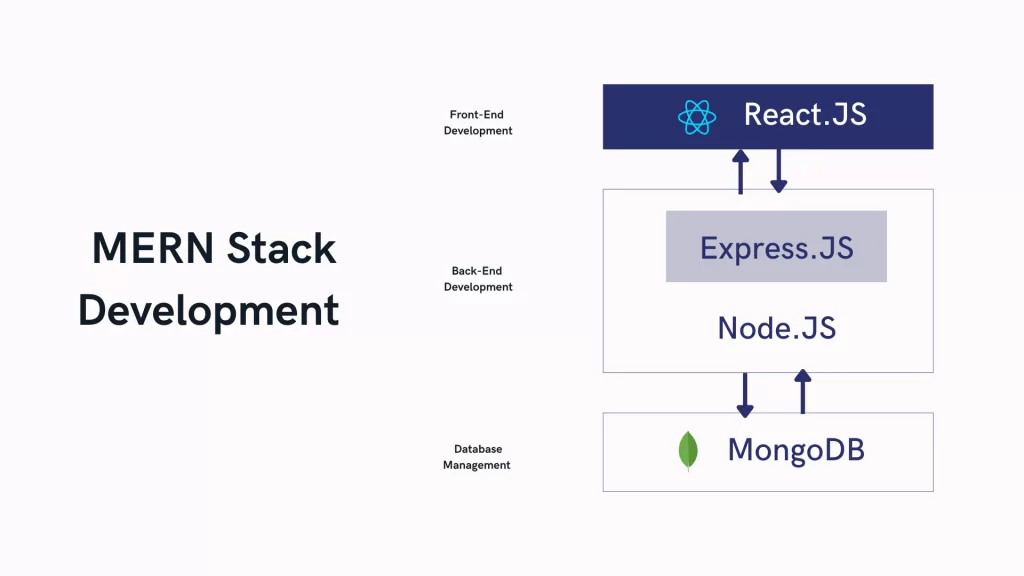
MERN Stack is one of the most powerful and popular web development stacks used today. It combines four cutting-edge technologies—MongoDB, Express.js, React, and Node.js—to deliver full-stack web applications that are fast, scalable, and user-friendly.
Whether you’re building a single-page application or a large-scale enterprise platform, understanding what MERN Stack offers compared to MEAN Stack and Full Stack development can help you make a more informed decision. This guide will walk you through all three, helping you choose the right stack for your next digital product.
What Is a Stack in Web Development?
In software development, a “stack” refers to a combination of technologies used to build an application. There are two major types:
- Technology Stack: This includes languages, frameworks, libraries, tools, and architecture patterns.
- Application Stack: Focuses on how these technologies are integrated to build and deploy the app—whether it’s a mobile app, web portal, or SaaS platform.
Choosing the right stack means aligning your project’s needs with the tools that help build and maintain it efficiently.
Full Stack Development: Covering It All
Full Stack developers are generalists. They work on both the front-end (user interface) and the back-end (server, database) of web applications. This holistic approach is ideal for startups and small-to-medium-sized businesses that want to move fast and minimize hiring costs.
Benefits of Full Stack Development
- Efficient Resource Management: Reduces the need for separate developers, streamlining the process.
- Versatile Developers: Professionals can switch between front-end and back-end tasks.
- Faster Time to Market: Small teams mean quicker deployment cycles.
- Cost-Efficient: Lower hiring and maintenance costs.
🔗 Related Read: Check out our guide on organizing types and interfaces in TypeScript to learn how to keep your full-stack codebase clean and scalable.
MEAN Stack: Angular-Powered Enterprise Applications
The MEAN Stack is another popular JavaScript-based framework that includes MongoDB, Express.js, Angular, and Node.js. It’s preferred for large-scale enterprise apps due to Angular’s structured architecture.
Key Advantages of MEAN Stack
- Standardized Development: Angular enforces strict structure, great for team collaboration.
- Isomorphic Codebase: Supports cross-platform development.
- Quick MVP Delivery: Helps in getting a Minimum Viable Product out fast.
- MVC Architecture: Keeps logic and UI separated for clean development.
- Integrated Testing: Angular supports built-in testing tools.
🔗 Read Next: Want to redirect routes cleanly in your Angular or Next.js app? Read our Next.js server-side redirect tutorial.
MERN Stack: React Brings Flexibility and Speed
The MERN Stack is similar to MEAN Stack, but swaps Angular with React, a library maintained by Meta (formerly Facebook). This switch changes everything—from flexibility to scalability.
Why Choose MERN Stack?
- MongoDB for Flexible Databases: Stores data in JSON-like documents, perfect for modern apps.
- React for UI: Component-based front-end development allows dynamic user interfaces.
- End-to-End JavaScript: Write your front-end and back-end in the same language—JavaScript.
- Scalability: Easily add new features as your application grows.
- Custom UI/UX: MERN Stack gives you complete control over the look and feel.
MEAN Stack vs MERN Stack: What’s the Key Difference?
The difference is in the front-end technology:
- MEAN Stack uses Angular, which is great for large, structured enterprise applications.
- MERN Stack uses React, perfect for smaller teams aiming for faster, flexible, and responsive apps.
Quick Comparison:
| Feature | MEAN Stack | MERN Stack |
|---|---|---|
| Front-end Framework | Angular | React |
| Development Speed | Moderate | Faster |
| Learning Curve | Steep | Easier for beginners |
| Flexibility | Less flexible | Highly flexible |
| Community Support | Strong | Very strong |
For example, if you’re creating a real-time social platform, MERN Stack would be a strong fit due to React’s performance and ease of use.
Is MERN Stack More Popular Than MEAN Stack?
Yes—MERN Stack has seen a surge in popularity, especially among startups and mid-sized tech companies. One reason is the growing demand for React developers, as React is widely considered easier to learn and integrate with various tools.
React’s component-based architecture allows better code reuse and a faster development cycle—key reasons why developers and businesses lean toward MERN Stack.
When to Use Full Stack, MEAN Stack, or MERN Stack?
Here’s how to decide:
- Use Full Stack if you’re building a small-scale app and want one developer to handle both ends.
- Choose MEAN Stack for enterprise apps with multiple modules and strict architecture needs.
- Opt for MERN Stack if you need fast iteration, flexible UI, and smooth user experience.
Still unsure? Consult with an experienced full-stack development agency to guide your project roadmap effectively.
Conclusion: The Best Stack Depends on Your Goals
There’s no universal answer in the Full Stack vs MEAN Stack vs MERN Stack debate. Each stack brings its own strengths. Your choice should be driven by:
- App complexity
- Team expertise
- Budget constraints
- Development timeline
- UI/UX priorities
If you’re leaning toward flexibility, speed, and a modern look—MERN Stack is a smart choice for most startups and growth-stage companies.
📌 Related Reads from Our Blog
Leave a Reply